Step off Roosevelt Avenue and in a minute you can be standing under tall trees with birdsong instead of traffic. That switch from busy streets to calm, green courtyards is the heart of Jackson Heights living. If you have wondered why these prewar courtyard co-ops feel different, you are not alone. In this guide, you will learn where the idea came from, what the buildings offer, how co-op life works here, and what to look for if you plan to buy. Let’s dive in.
The garden-apartment idea that built Jackson Heights
Jackson Heights began as a planned garden-apartment community in the 1910s, shaped by the English Garden City movement and developed by the Queensboro Corporation. The vision was simple and smart: perimeter buildings around shared interior gardens that give residents light, air, and green views as a daily experience. You can still see that original planning philosophy throughout the neighborhood’s historic core. For a quick overview of how the area took shape, start with the history of Jackson Heights.
By the late 1910s the Queensboro Corporation also introduced cooperative ownership for many complexes, combining whole-block planning with resident stewardship. That structure helped keep the courtyards planted, tended, and valued across generations. For background on the developer’s approach and the role of co-ops in this model, see the Queensboro Corporation and the planning legacy reflected in Jackson Heights’ history.
Why cooperative ownership matters
Co-ops put residents in charge of building operations, from garden care to major repairs. That builds long-term commitment but also comes with rules. Boards approve buyers, set sublet policies, and manage budgets that fund ongoing maintenance and capital projects. If you are comparing buildings, it helps to understand how governance trends can shape culture and expectations, a topic explored by Habitat Magazine.
Architecture you can see and touch
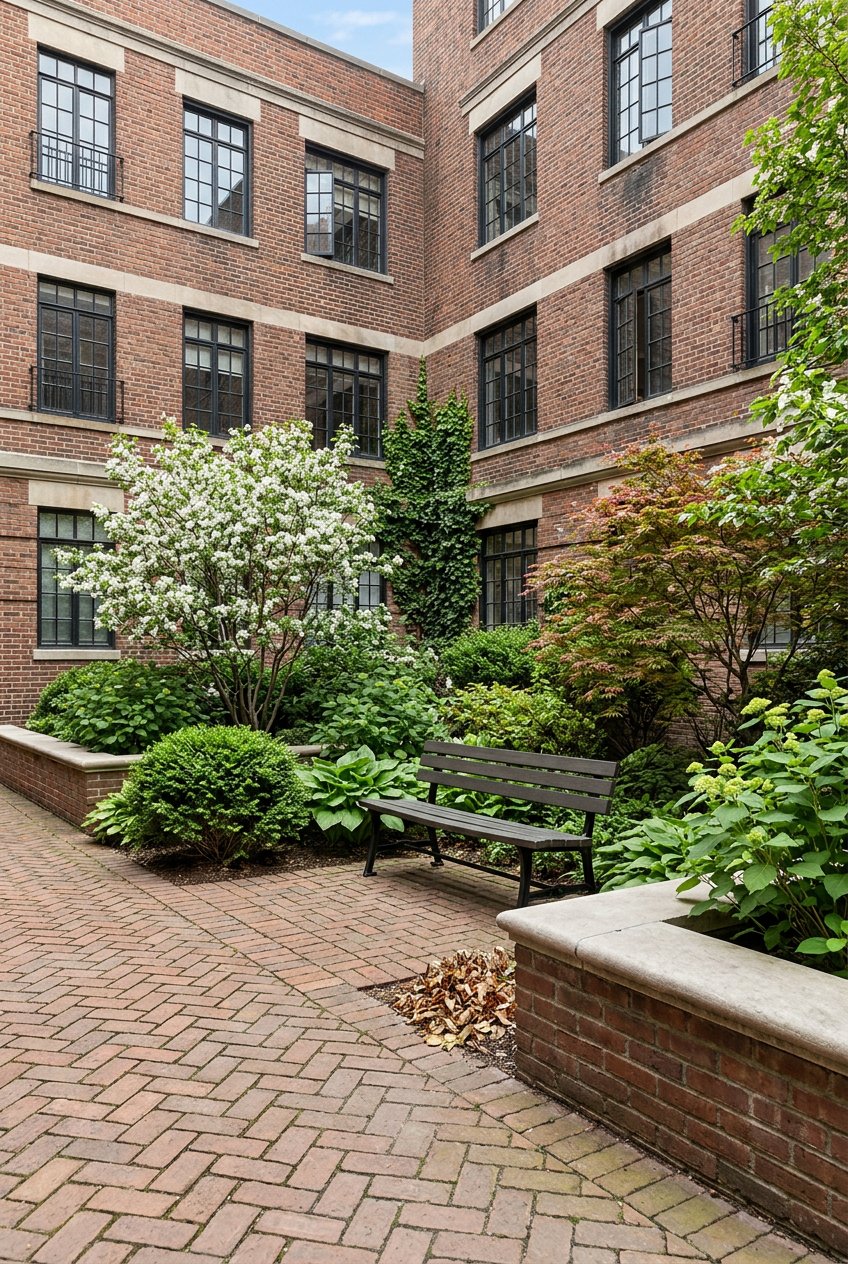
Jackson Heights’ garden co-ops are not just about green space. They are about the feel of prewar construction. Expect brick masonry façades in revival styles, decorative brickwork, stone entry surrounds, and in some complexes, slate or tile roofs. Inside many units, you will find high ceilings, wood-sash windows, and oak or parquet floors that give homes a warm, tactile character.
The block plans are intentional. Buildings often form U or H shapes, or parallel rows that face into long interior gardens. That design maximizes light, cross-ventilation, and views into planted courtyards. Architect Andrew J. Thomas, a key figure here, refined these layouts to balance privacy with shared green space. Learn more about his work on the Andrew J. Thomas page.
A few landmark complexes to know
- Linden Court. Designed by Andrew J. Thomas, it pairs buildings around a broad central garden, a textbook example of the type described in the Andrew J. Thomas entry.
- The Château. A block-long interior garden with French Renaissance cues, often noted for its roofline and elegant entries. Get a feel for the complex via the Château overview.
- The Greystones. Early rows with rear gardens that help define the neighborhood’s perimeter-block rhythm. See context and images in The Greystones entry.
How courtyards change daily life
The most immediate difference is sensory. Street-facing blocks along Roosevelt Avenue and Broadway hum with city energy. Step through a garden gate and the noise falls away. You get dappled light, mature trees, and neighbors chatting on benches. That contrast is a big part of why these homes feel like a refuge, a quality you can see in historic descriptions of places like The Greystones.
There is also a practical layer. Many courtyard units have multiple exposures and cross-breezes, which can make interiors feel brighter and calmer. Because these buildings cluster around shared green space, residents often know each other by name. Garden keys, posted rules, and community planting days are common, reflecting co-op culture described by Habitat Magazine.
Historic-district protections help keep this fabric intact. The core of Jackson Heights has been a designated New York City historic district since 1993. Exterior changes, from window replacements to masonry work and fences, typically need Landmarks approval. That preserves curb appeal and the courtyards you see today, though it can add time and cost to exterior projects. For an overview of the designation, visit the Historic Districts Council summary.
What to expect from co-op rules
- Board approval for purchasers is standard, with financial and reference documentation required.
- Subletting can be limited or require board consent. Always confirm current policies.
- Maintenance fees support staff, insurance, utilities, and reserves. Older buildings may have assessments for capital work.
- Garden access rules vary by building. Expect posted hours and guidelines that keep courtyards well maintained.
Location perks: parks, transit, and food
Courtyard living pairs nicely with Jackson Heights’ walkable amenities. Travers Park is a small, well-loved community hub that also hosts the year-round Jackson Heights Greenmarket. It is a weekend ritual for many residents and a quick stroll from several courtyard blocks. Learn more about the park’s role at Travers Park.
A few blocks away, the 34th Avenue Open Street, now planned as a permanent linear “Paseo Park,” adds a community plaza feel with calmer traffic, school plazas, and flexible space for programming. It reinforces how pedestrian-friendly the neighborhood is. See project details on the NYC DOT 34th Avenue page.
Transit access is a major edge. The Jackson Heights–Roosevelt Avenue/74 St complex connects you to the 7, E, F, M, and R lines, with the Q70 running to LaGuardia. Those connections helped make the original garden-apartment idea commercially viable and still make for an easy commute today. For background on the hub and neighborhood context, explore Jackson Heights.
You also have a rich dining scene. 37th Avenue offers great breakfast and café options. Around 74th Street and Roosevelt, you will find South Asian shops and eateries, while parts of 37th Avenue and Roosevelt highlight Latin American spots. The Arepa Lady is a well-known local favorite. These corridors are part of the area’s celebrated diversity, reflected in the Jackson Heights overview.
Buying smart in a Jackson Heights co-op
Courtyard co-ops can offer strong value compared with condos, often with larger rooms and that coveted garden view. In return, you agree to co-op norms that protect the property and support long-term stewardship. To do your homework, request and review:
- Proprietary lease and house rules
- Recent board minutes and building financial statements
- Capital plans and any recent or pending assessments
- Sublet policies and purchase application requirements
- Any Landmarks items on the board’s radar for exterior work
These documents help you understand both the lifestyle and the costs. For insight into how culture and policy shape co-op living, see Habitat Magazine’s look at governance dynamics.
A brief note on history and inclusion
Early Jackson Heights development included exclusionary practices that shaped who could buy in the neighborhood’s first wave of construction. Over time, new residents from around the world transformed the area into one of the city’s most culturally diverse places. You can read a clear, scholarly overview of this evolution in the Macaulay Honors College resource on the shift from covenants to hyperdiversity in Jackson Heights.
Quick touring checklist for courtyard co-ops
- Orientation. Does the unit face the interior garden, the street, or both? Check light at multiple times of day.
- Exposures and airflow. Note window count and directions for cross-breezes.
- Garden access. Ask about hours, guest policies, and key or fob systems.
- Historic conditions. Confirm window type, façade work timelines, and how Landmarks review may affect repairs.
- Building systems. Ask about elevator maintenance, roof work, boiler/heat, and upcoming projects.
- Financial health. Review reserves, assessments, and shareholder communication.
- Lifestyle fit. Consider laundry location, bike storage, stroller parking, and courtyard seating.
Ready to explore Jackson Heights courtyards?
If the idea of stepping from a lively avenue into a quiet, green courtyard speaks to you, you are in the right place. With deep Queens expertise and hands-on help through co-op board packets, showings, and negotiations, I will guide you through every step. I also speak Hungarian, Romanian, and Spanish to make the process more comfortable. Have questions or want to see current listings? Reach out to Anna Diaz to schedule a consultation.
FAQs
What is a courtyard co-op in Jackson Heights?
- It is a prewar cooperative building planned around a shared interior garden, part of a neighborhood-wide garden-apartment strategy documented in Jackson Heights history.
How does historic-district status affect renovations?
- Exterior changes like windows or masonry typically require Landmarks review, which preserves curb appeal and courtyards but can add time and cost; see the Historic Districts Council summary.
Are courtyard-facing units quieter than street-facing ones?
- Often yes. Interior garden views reduce street noise and many units have multiple exposures for light and airflow, a quality noted in sources like The Greystones overview.
What should I expect from a Jackson Heights co-op board process?
- Expect a detailed application, interview, and building-specific rules on subletting and financing; governance culture and tradeoffs are outlined by Habitat Magazine.
How close are courtyard co-ops to transit and markets?
- Many are within a short walk of the Jackson Heights–Roosevelt Avenue/74 St transit hub and Travers Park’s Greenmarket; see neighborhood context in Jackson Heights and Travers Park.